High power bills
The massive heat load in your attic pours down into your living space and overworks your A/C, running up your power bill.
Why is your attic 147°?
The Air Tornado: Power Intake Ventilation Home Cooling System
We blow cool outside air into your attic at high volume and high speed, so the heat, humidity and contaminated air get pushed out. A cool, fresh attic is a cooler, fresher home.
Text or call 404-602-2983 for your FREE in-home evaluation.
Every house has the same design flaw
The massive heat load in your attic pours down into your living space and overworks your A/C, running up your power bill.
Stagnant attic air carries pollen, bacteria and dust that can leak into your A/C ducts and compromise the air in your home.
Upstairs bedrooms stay hot and stuffy, nobody sleeps well, and the thermostat wars never end, because the A/C just can’t keep up.
Have you ever wondered why the air conditioning ducts feeding the vents in your home are in the attic? It’s counterintuitive to put a cooling delivery system in the hottest part of your home, where temperatures reach 147°.
That’s a system designed to blow 53° cold air through an attic that has become a 147° sauna. It was a cost-saving design for the builder. Now you bear the burden: a building flaw that costs you money, comfort and even your health.
Have you ever turned on your air conditioning and wondered if you accidentally turned on the heater instead? If the answer is yes, your attic is the problem.
On a summer day, your roof’s surface can reach 170–220°. That heat conducts through the shingles and radiates across the attic, cooking your shingles and ductwork. Traditional vents are passive: ridge vents, box vents and turbines just wait for the wind.
RTA (Roof Tech Advisor) field readings
The solution is cool air INTAKE, mixed with turbulent flow
One permanent solution: power intake ventilation. Cool air in, hot air out. At the heart of the system is the Attic Torpedo, and every system uses at least two of them.
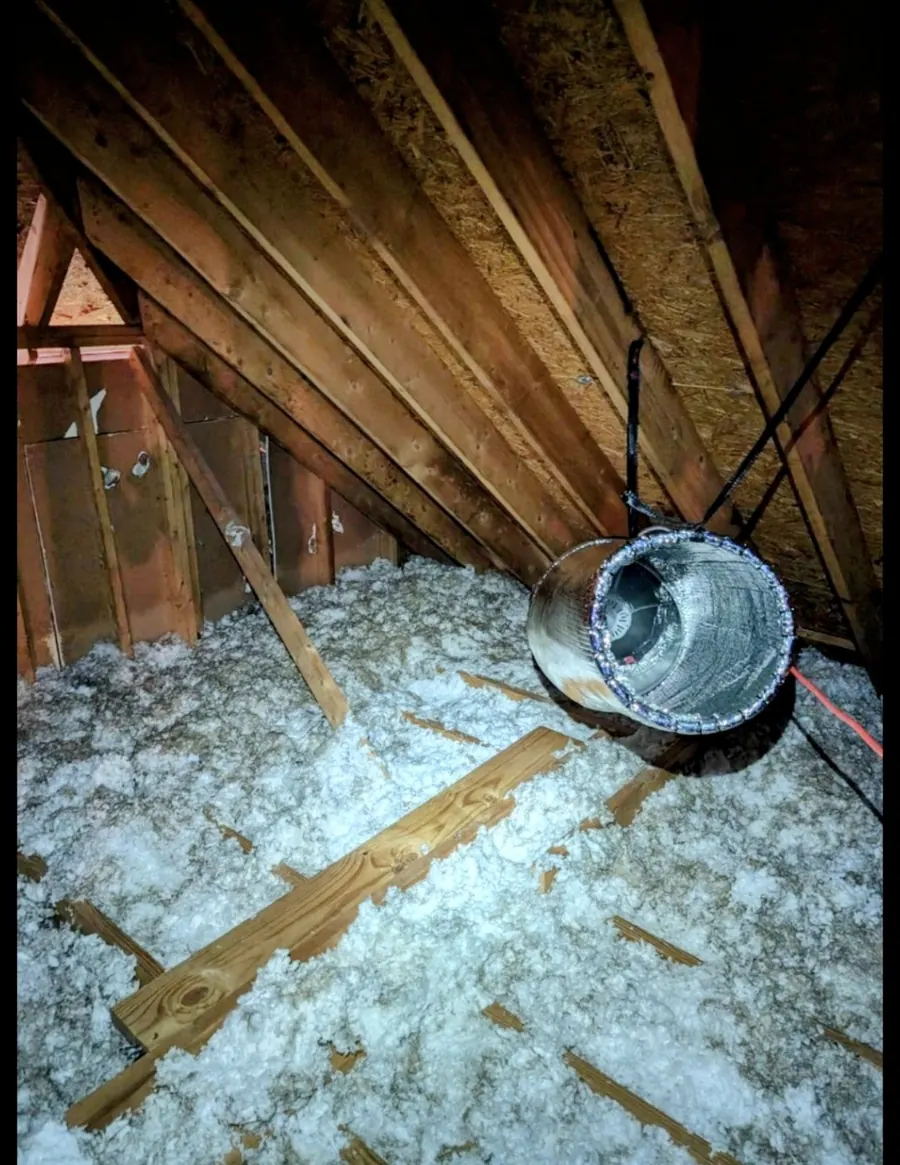
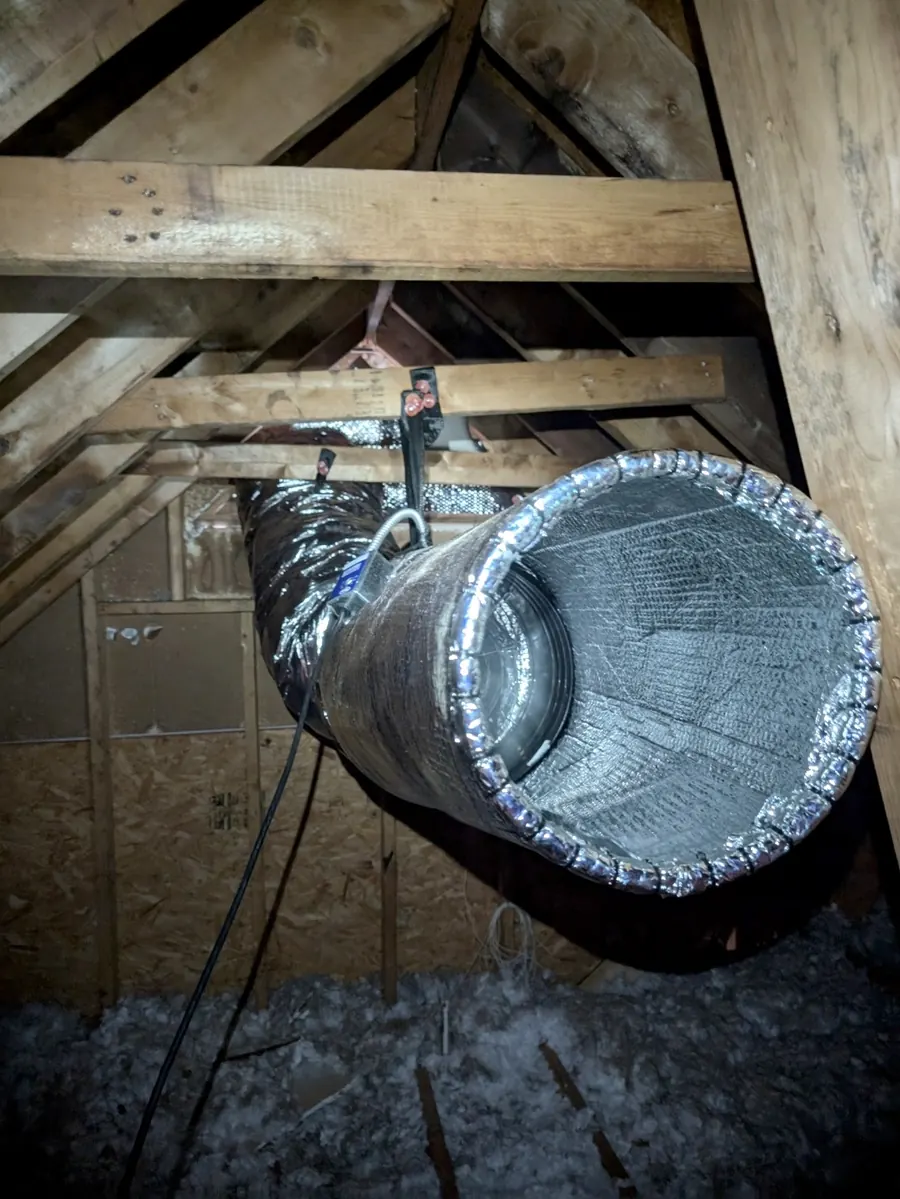
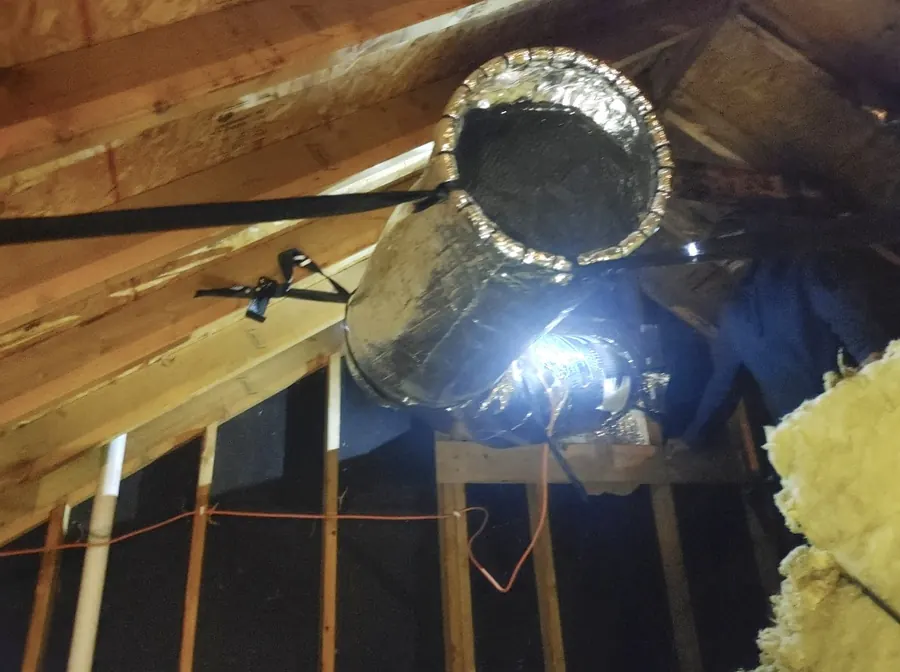
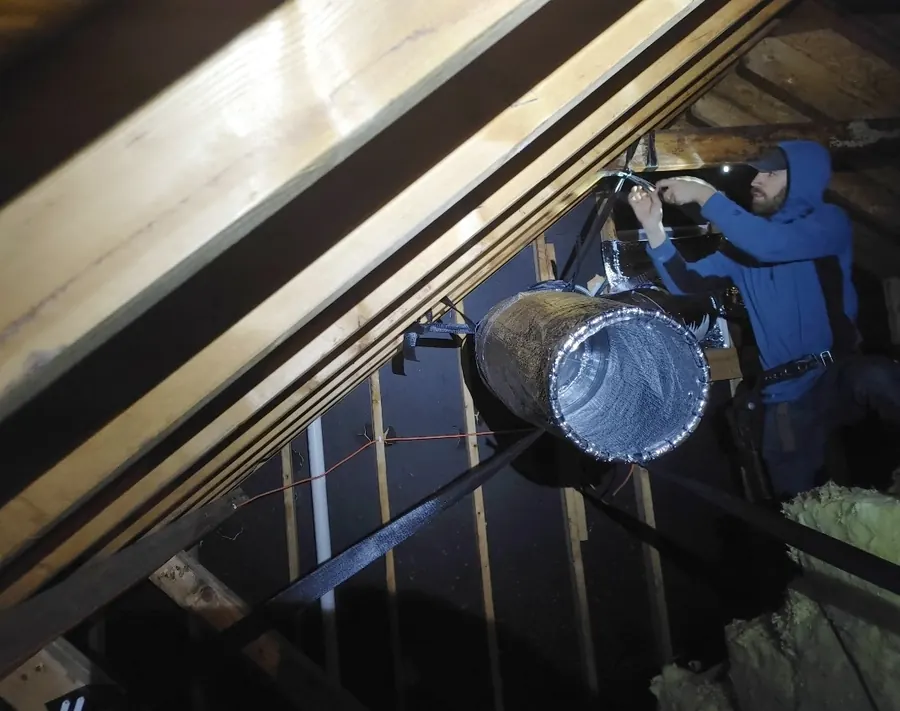
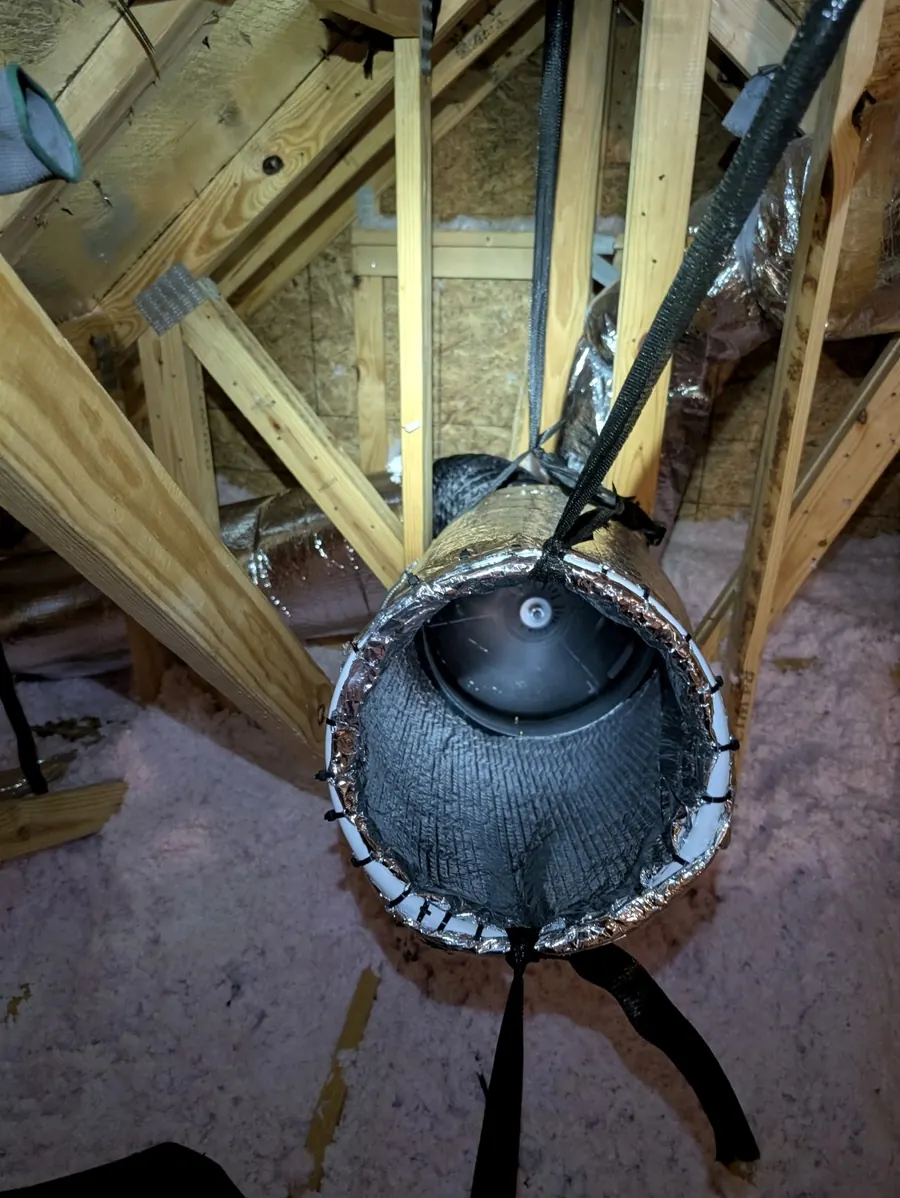
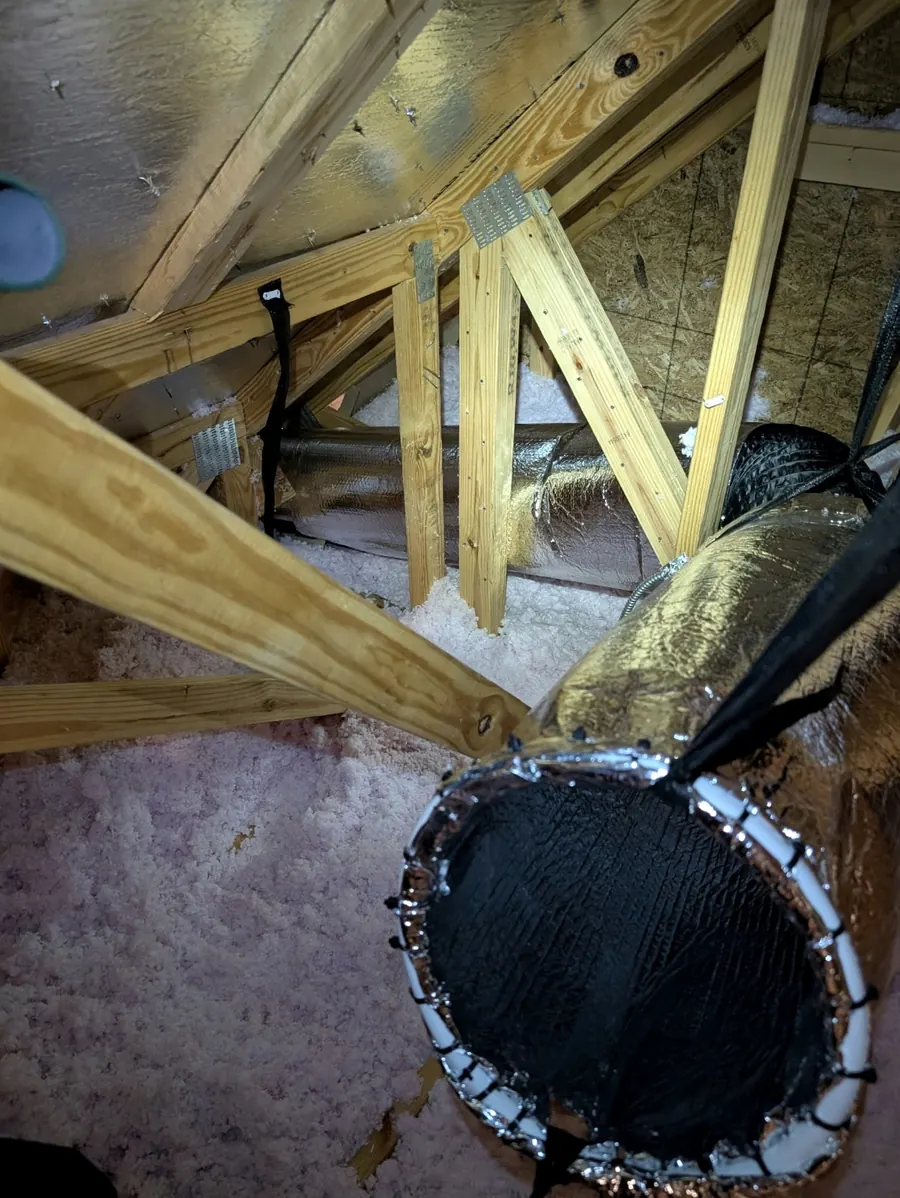
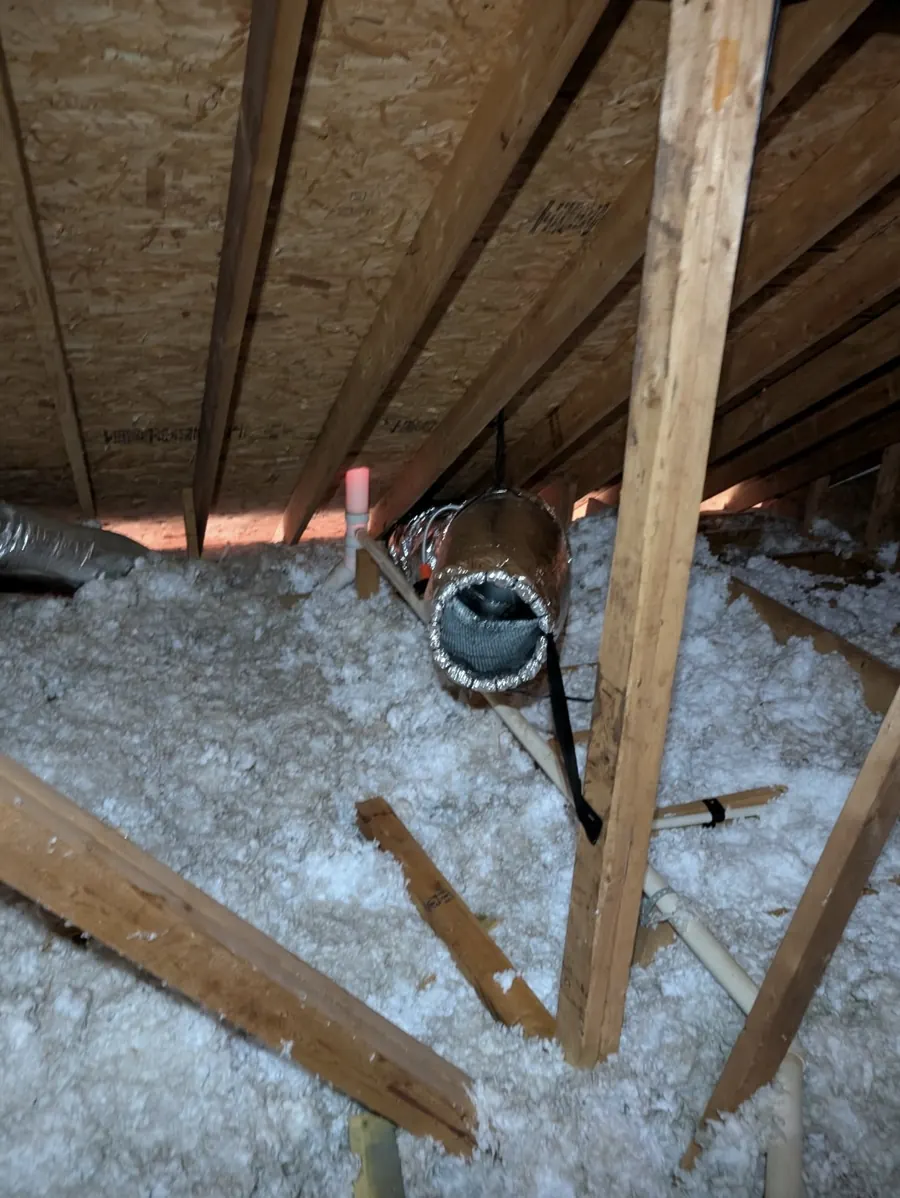
Each Attic Torpedo sits down at the eaves and pulls fresh outside air in through your soffit vents, along its flex duct, and fires it into the attic like a cannon.
Two Attic Torpedoes, one at each end of the attic, aim at each other. The conflicting air currents collide in the middle and create turbulent, positive air pressure, a vortex effect that disrupts the static heat load.
The pressure forces the hot, humid, contaminated air out through your existing ridge and roof vents, and keeps your conditioned air down in your living space, where it belongs.
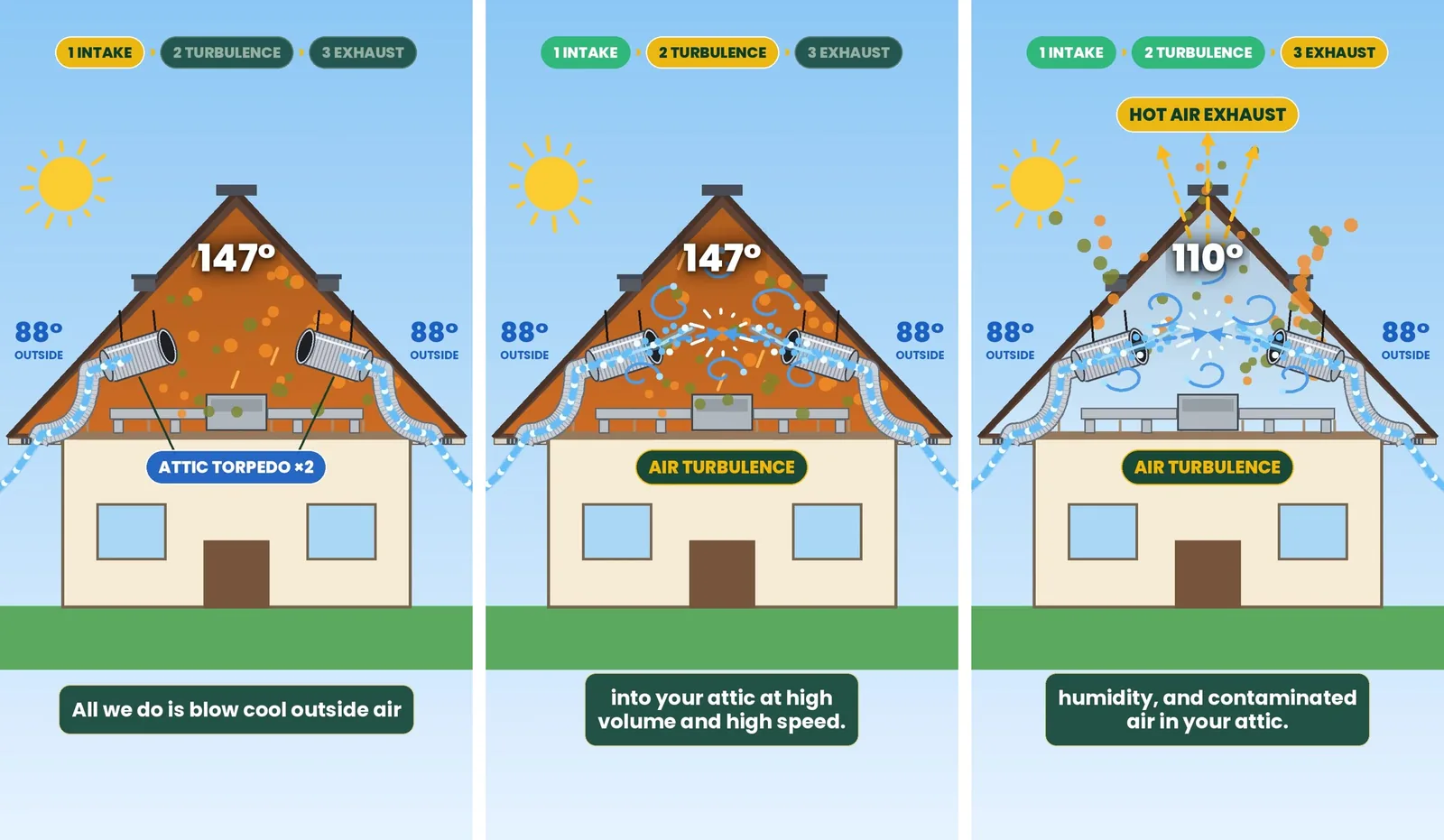
Unlike exhaust fans, which create negative pressure that can suck the cool air out of your home, the Attic Torpedo creates positive pressure. The turbulent intake air cools your attic, cools down your air ducts and cools off your hot roofing system.
The air blows out of a 12-inch mouth at the end of a cone-shaped portal and stirs the whole attic. That can pressurize the attic in under 2 minutes and force the hot, humid, contaminated air out of your existing vents in under 10.
It works all by itself: a hands-free digital thermostat turns it on when the attic gets hot and off when it’s cool, holding your attic at an average of about 110°. An attic temperature sensor and wireless remote display let you adjust the set point and monitor your attic temperature.
Real attic, real readings

Temperatures from RTA field readings. Results vary by home, attic and weather.
A cool, fresh attic is a cooler, fresher home
Your home temperature can drop up to 10 degrees. No more hot bedrooms, and no more complaining.
Your air conditioning can blow up to 7° colder once it isn’t fighting a 147° attic.
Lower power bills and less A/C run time. In some cases it can pay for itself in less than 24 months.
The heat, humidity and contaminated air get evacuated. Fewer allergy triggers, less dust and longer-lasting filters.
A cooler, fresher home full of comfortable people who aren’t complaining that they can’t sleep at night.
Lower attic temperatures mean less heat punishment for your shingles and underlayment, and your A/C can cycle properly and operate within its design parameters.
*Results vary. Savings figures are reported by homeowners and depend on your home, your A/C system and your utility rates.
The Attic Torpedo
The Attic Torpedo is the unit. The Air Tornado is the system. Every system uses at least two.
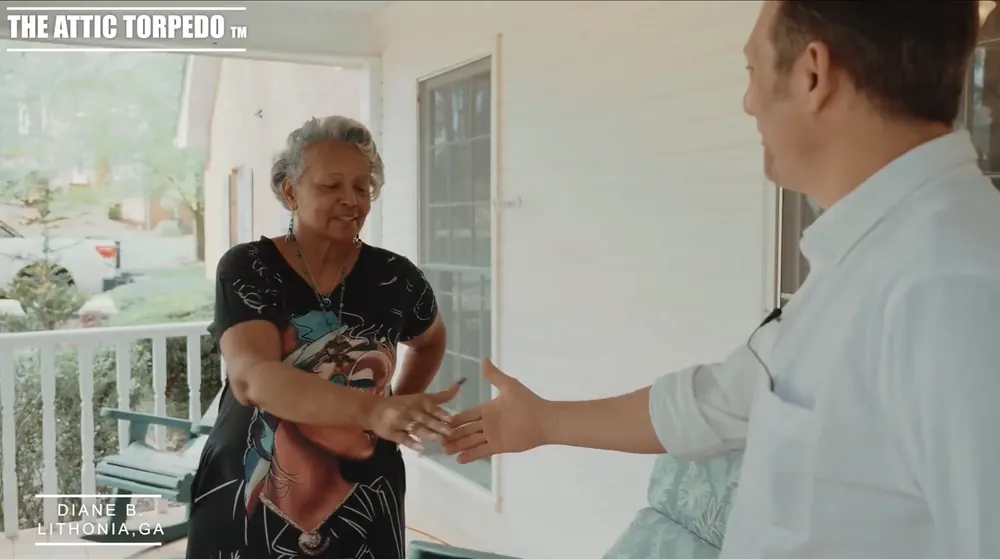
Real homeowner testimonials
These stories and videos were first published on theattictorpedo.com.
“My upstairs bedroom is incredibly hot. After the installation of the Attic Torpedo now it’s cold. The installation of the Attic Torpedo dramatically dropped my power bill by $125 a month, about $1,500 a year. I would recommend this to anyone, it’s well worth the investment.”
“Before the Attic Torpedo our AC was running all day and night. It was very uncomfortable to sleep because our upstairs bedroom was hot and stuffy. We needed another window AC unit and run fans at night.”
“We were skeptical at first but after the installation of the Attic Torpedo we were able to maintain our house temperature in the 70’s for the first time ever AND we cut our power bill in half. Amazing!”
“After the installation of the Attic Torpedo my attic is not hot anymore ... it’s about the same temperature as the outside. I’m saving on my power bill, the air quality is better and the AC does not work as hard as it used to. It was a great investment for my home.”
Individual results vary.

Meet Danny
“Hi, I’m Daniel Egan. I’ve spent 20 years in building science, and I own Roof Tech Advisor, a top-rated roofing company. Years ago, I discovered, and solved, a massive problem hiding in almost every attic.”
Roof Tech Advisor, LLC is a 5-star rated roofing company in Atlanta, GA, and the authorized distributor and installer of the Attic Torpedo. We design and install The Air Tornado system for your home and guarantee its performance.
Guaranteed performance. Let us design and install your system for optimum performance. We guarantee it will dramatically improve the A/C temperature in your home, lower your power bill and alleviate hot spots in your rooms.
*See theattictorpedo.com for warranty details.
Watch
Questions
The Air Tornado Home Cooling System is the whole system. The Attic Torpedo is the unit at its heart. Every Air Tornado system uses at least two Attic Torpedoes.
It uses power intake ventilation: cool outside air in, hot air out. The Attic Torpedoes pull fresh air in through your soffit vents and blow it into the attic at high volume and high speed. The colliding air currents create turbulence and positive pressure that push the heat, humidity and contaminated air out through your existing vents. With a cooler attic, your A/C and ducts don’t fight a 147° heat load.
Ridge vents, box vents and turbines are passive and wait for the wind. Exhaust fans pull air out and create negative pressure. The Attic Torpedo pushes cool air in, creating positive pressure that keeps your conditioned air down in your living space. In RTA field readings, attics with ridge vents ran 147°, box vents 155°, turbines 140° and power exhaust fans about 137°, compared with about 110° with The Air Tornado.
No. There are no roof cuts, no roof penetrations and no power tools. It uses your existing soffit and roof vents. One installer can set it up in about an hour.
No. A hands-free digital thermostat turns it on when the attic gets hot and off when it’s cool, holding an average of about 110°. A wireless remote display lets you adjust the set point and monitor your attic temperature.
Each Attic Torpedo plugs into a standard 120-volt outlet.
Homeowners report savings of up to $1,500 a year, and in some cases the system can pay for itself in less than 24 months. Results vary with your home, A/C system and utility rates.
Every home and every attic is different, and the Attic Torpedo adapts to almost any attic. A free in-home evaluation will tell you if your home is right for The Air Tornado.
A technician evaluates your attic heat load, collects thermal temperature readings and documents your roofing system with digital pictures. You get professional recommendations and options for a permanent solution. Text or call 404-602-2983 to schedule.
Every Air Tornado Home Cooling System comes with a 10-year manufacturer warranty and a 100% performance and satisfaction guarantee.* *See theattictorpedo.com for warranty details.
Roof Tech Advisor, LLC, a top-rated roofing company in Atlanta, GA, is the authorized distributor and installer. Text or call 404-602-2983 to see if your home is in the service area.
Why wait?
Stop being a victim of a bad home design. Call or text and a professional technician will evaluate your home, give you professional recommendations and show you options for a permanent solution.
404-602-2983More about the Attic Torpedo: theattictorpedo.com